

Is there an alternative scene in the Serbian pavillion at the Venice Biennale?
In her introduction for this year’s Venice Biennale entitled “In Minor Keys,” curator Koyo Kouoh emphasized that the 61st exhibition of art “intends neither a litany of commentary on world events, nor an inattention or escape from compounding and continuous intersecting crises”. She rather proposed “a radical reconnection with art’s natural habitat and role in society: that is the emotional, the visual, the sensory, the affective, the subjective”. This, however, proved to be an impossible mission. On the eve of its opening, the Biennale’s jury using the e-flux portal announced its intention to “refrain from considering those countries whose leaders are currently charged with crimes against humanity by the International Criminal Court (ICC)”. Notwithstanding the fact that members of the jury (incidentally all-female this year) named no names, it was clear that their statement referred to Russian president Vladimir Putin and Israeli prime minister Benjamin Netanyahu. Eight days later, the jury submitted its collective resignation. Instead of providing an elegiac review of the world’s misfortunes, this year’s Biennale turned out to be one of the most turbulent in the past few decades.
In the wake of the jury’s resignation, the Biennale’s administration this year decided not to present the Golden Lion, traditionally awarded by the jury, and introduced the “Visitors’ Lion” instead. All ticket holders for the Biennale are invited to vote for the best national pavilion and the best artist. The award ceremony, initially planned for May, was rescheduled for November 22nd, the last day of the Biennale, so as to give all visitors an opportunity to vote. But that was merely the beginning of the troubles. On May 6th, members of the Russian punk band Pussy Riot and the Ukrainian feminist group Femen surrounded the Russian pavilion holding “No pasarán” placards and pink flares, protesting the participation in the Biennale of a military power engaged in an already years-long aggression against a neighbouring state. Barely a few days later, the Art Not Genocide Alliance, ANGA, organized mass demonstrations in front of the Arsenale, one of the traditional Biennale venues, where the Israeli exhibition was installed. Their protest against the “Pavilion of genocide”, as ANGA referred to the exhibition of Israeli artists, caused a conflict with the police. The same group also organized a day-long strike of those working at the Biennale on the very day of its opening, May 8th, as well as a protest occasioned by the visit to the event of the American ambassador to Italy Tilman Fertitta, one of the multimillionaires from the orbit of the US president who planned to anchor his super-yacht right in front of Giardini Park, the Biennale’s central location.
All this resulted in an event in which national pavilions were represented with varying degrees of closedness. For instance, the Israeli pavilion, adjacent to that of the US, was completely locked and bolted. In early July the entrance to this building, one of the more recent structures in Giardini Park, resembling a bunker with its strict geometrical architecture and scarcity of display windows, gathered only multiple layers of dust and dead leaves. The next level of this inglorious scale awaits visitors a bit further, at the Russian pavilion, which one could describe as not open, but slightly ajar. During the Biennale’s preview week, the pavilion was opened with an installation entitled “The Tree is Rooted in the Sky”, comprising performances of musicians of diverse genres, from folk to techno music, along with Timofey Dudarenko’s installation “Why Do Flowers No Longer Smell”. After that the pavilion was closed, but not completely. Through the clear glass panes of its locked doors, visitors can watch videos of Russian techno DJs on monitors. Around the corner, through semi-closed windows, more enterprising visitors may also glimpse Dudarenko’s installation (seven upholstered tree stumps positioned around a dried-up bush). This partial openness prompted the European Commission to withdraw about two million euros of assistance to the Biennale, explaining that “cultural events funded by European taxpayers’ money should safeguard democratic values, foster open dialogue, diversity and freedom of expression”, all of which are “values not respected in Russia today”. And finally, there are also pavilions which, although seemingly open, conceal closed regimes. The competition in this group is quite interesting, but the Serbian pavilion appears to be at the forefront.
Serbia’s participation in the Biennale this year has been beset by scandals, from the selection of the artist – Predrag Đaković, done without any insight of the professional public and thoroughly non-transparently, to the opening of the pavilion by Nikola Selaković, a person subject to an ongoing criminal investigation in the country. All that has already elicited quite a lot of comments and the related details really need not be repeated. This summer while the dust settles in Giardini Park, the Serbian pavilion still resembles a slowly unfolding low-intensity scandal.
The custodial note at the pavilion’s entrance, that introduction to the installation “Through Golgotha to the Resurrection”, abounds with resounding names in excess of anything displayed by other pavilions. These include, as listed, Jacques Derrida, Walter Benjamin, Theodor Adorno, Dubravka Ugrešić, and even authors like Ivan Čolović and Radomir Konstantinović, who are targets of continuing adverse campaigns from the regime’s media minions. The list of all these names acts as a smokescreen for platitudes such as “the visual field of memory”, “the tragic horizon of the installation stretching beyond the boundaries of Europe to encompass the global experience of the twentieth century”, and pontifications about the possibility to reestablish “a new common language of values”. Đaković and the custodians of the pavilion Tomaš Koudel and Olga Čučković use the Biennale’s theme as a pretext to circumvent truly important issues rather than as a challenge to face them. They obsequiously (ćaci-like) stick to the theme of the Biennale, lest they expose themselves to any objection on that front: thus the custodial statement at the pavilion’s entrance makes a point that the video projection “piano improvisations in A minor” is a component part of the installation (!). God forbid they ever hit a major key in that holy temple of art. Their rendition turns the melancholy of the “minor key” into an insipid rubato melody rambling between society’s neuralgic points (actually sought for and addressed by true art), while firmly adhering to common places.
The medium of a Biennale pavilion has its conventions which are, in effect, fairly narrow in scope. They have of late been reduced to two types of spatial solutions: conventional exhibition or total ambiance. Đaković and his team opted for the latter solution, but approached it in a thoroughly prosaic manner. Đaković’s installation, as announced on the eve of the Biennale, consists of 14.000 “artefacts” covering 320 square meters of the pavilion’s walls. These “artefacts,” comprising personal IDs, photographic portraits, administrative forms, press clippings, maps and the like, are plastered floor-to-ceiling on two of the pavilion’s walls; the third wall is overlaid by stacked suitcases, while a half of the fourth wall boasts a stretched-out inscription (unworthy of quoting), and the other half is reserved for that decidedly non-major video projection. The custodians in their statement emphasize that “the second half of the 20th century brought about a thorough change in visual culture”, thus alluding to the decision to shape this compendium of random images and objects into a total ambiance surrounding the visitors of the pavilion. On the other hand, already at first sight it is quite clear that the paper “artefacts” used as wallpaper in the gallery originate from the first half of the past century. Thus it appears that the 20th century is divided into the first half, accounting for the actual content of the installation, and the second half, out of which the author and the custodians derive a new “visual culture”. Does the former stand for “Golgotha” and the latter for “resurrection”? That is not clear, any more than what the title of the exhibition refers to, except the late 1980s, that golden age of ascent of new Serbian nationalism when a two-volume book of a similar title simply flew from the shelfs of bookstores.
If the contents of this installation were to be expanded to the second half of the 20th century, and especially its last decade, the picture would be totally different, as it would have to include, e.g., the personal documents of exiles from east Bosnia issued by the then Federal Republic of Yugoslavia to dispatch them onwards to Western Europe; anonymous portraits of Kosovo Albanians who some ministers of the Serbian government (the one which produced this pavilion) would today like to deport and “ethnically cleanse”; press clippings with reports from Srebrenica and other places of execution in Bosnia; maps of entities used as bargaining chips or sources of profit, from SAO (Serbian Autonomous Region) Krajina and SAO Western Slavonia in the 1990s, to Kosovo all the way to this day; the pile of suitcases would have to include the red, white and blue bags which, as Dubravka Ugrešić writes, clearly identified the refugees in the 1990s. All these “artefacts,” much more recent and specific than those diligently collected and pasted on the pavilion’s walls by Đaković, are available to all who want to see and use them. For instance, in the sphere of cartography, much more telling than military maps of Europe before World War II (Das europäische Russland, Karte des russischen Kriegsschauplatzes etc.) would be those found in the book Kosovo: History in Maps by the Croatian historian Mirela Altić published by Brill (while this installation was under preparation). This book is not mentioned in Serbia and cannot be found even in the National Library catalogue. Sources referring to present-day Serbia in any way at all are unacceptable for this year’s Serbian pavilion. That is, in fact, its basic principle, its true concept. Such as it is and where it sands, it is a clear reflection of the state of Serbia and its institutions, hijacked by a group of controversial businessmen who had long lost their legitimacy, if there was any to lose at all. The condition for the integration of this regime into international flows of capital, goods, people and ideas (primarily capital), which is actually the mainstay of its survival, is a complete mental, informational, and spiritual isolation of subjects under the thumb of this same regime.
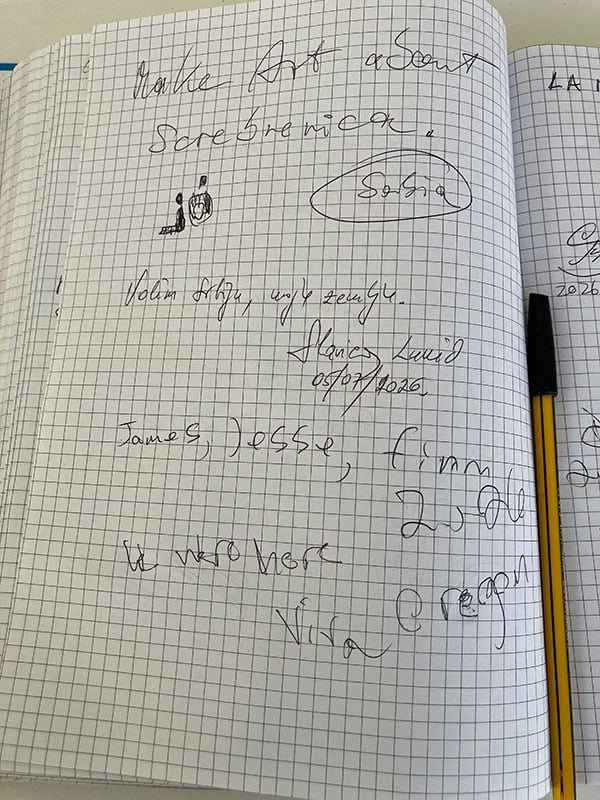
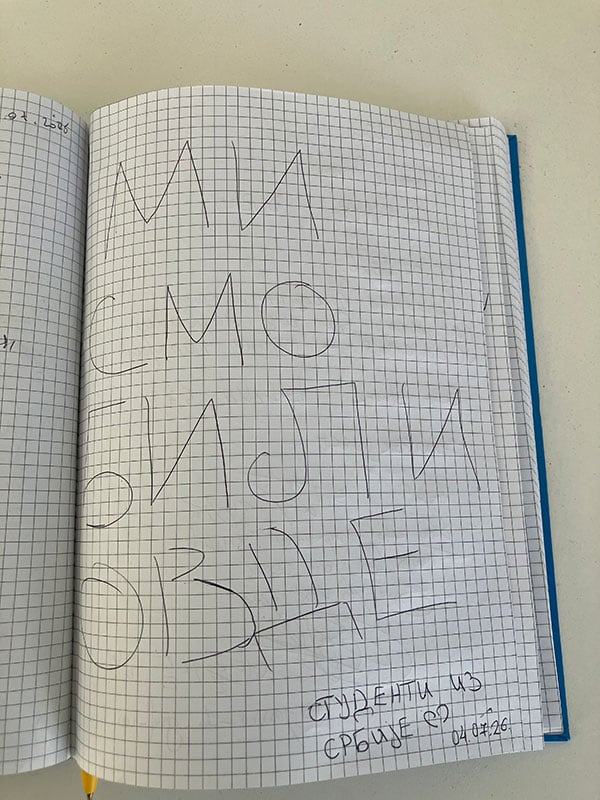
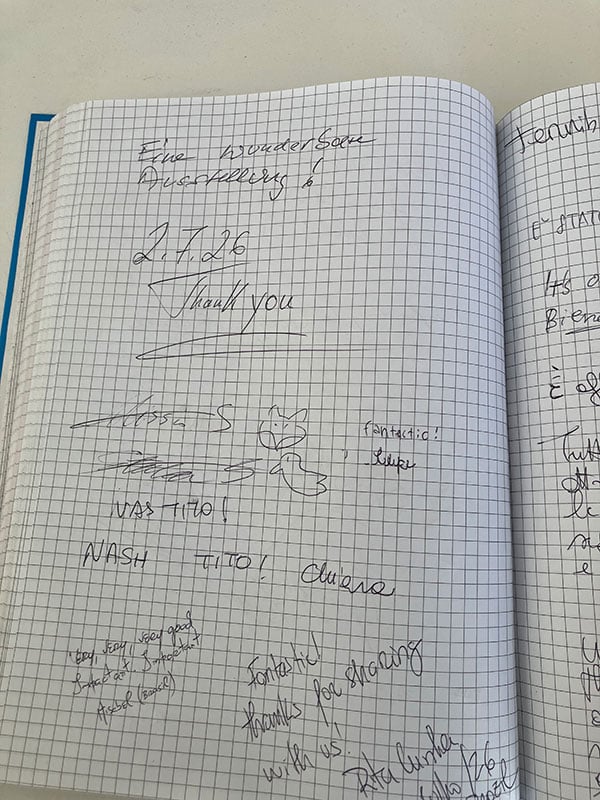
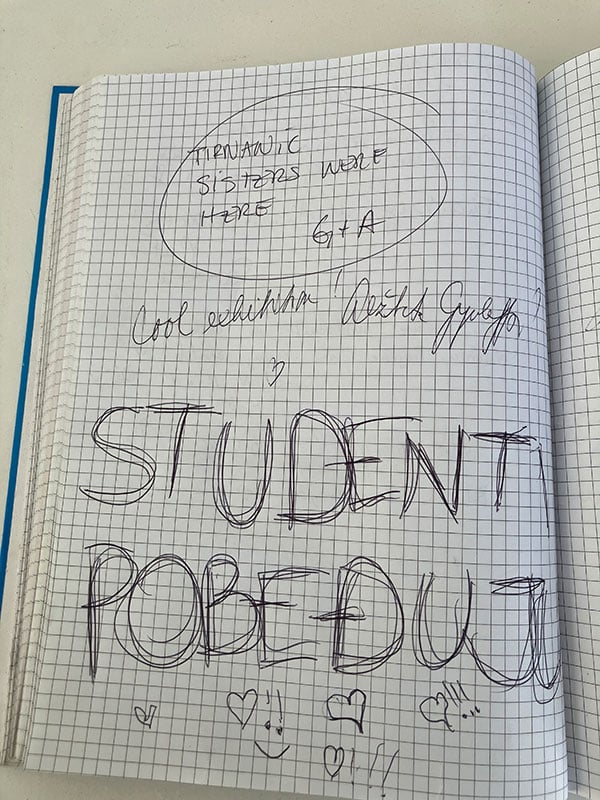
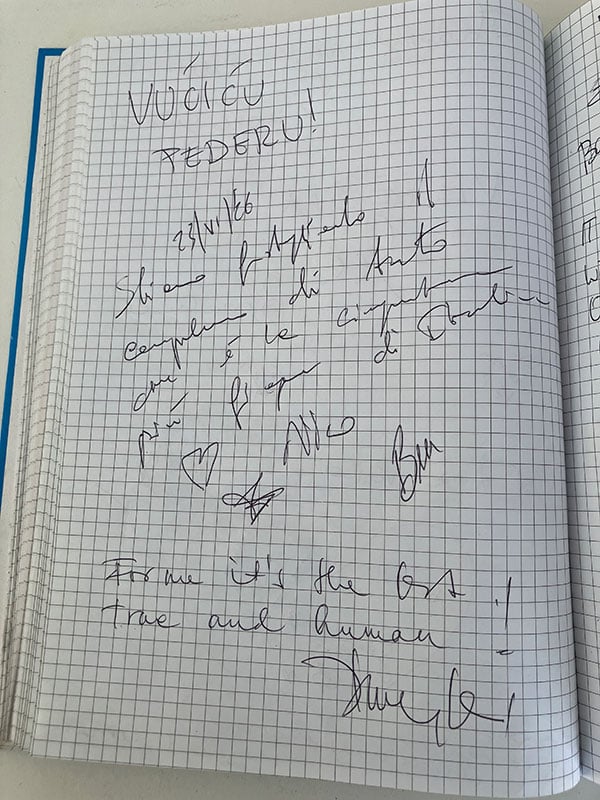
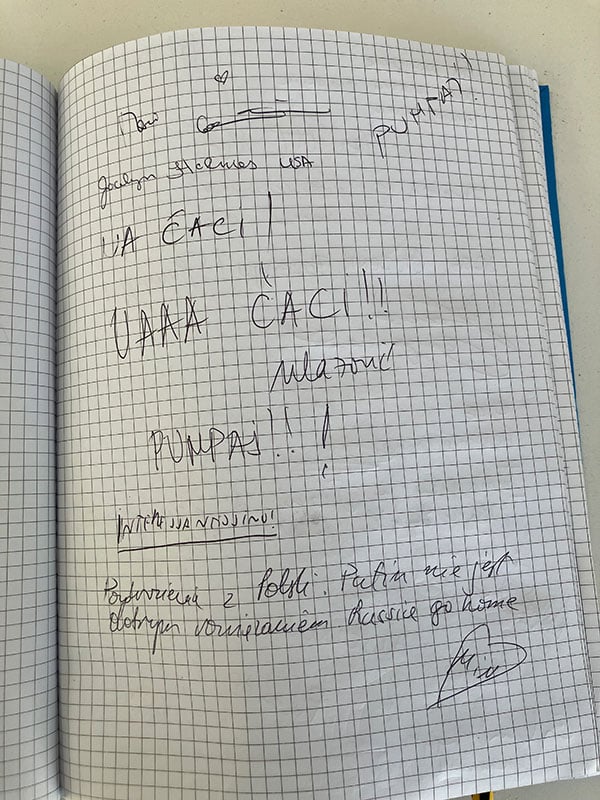
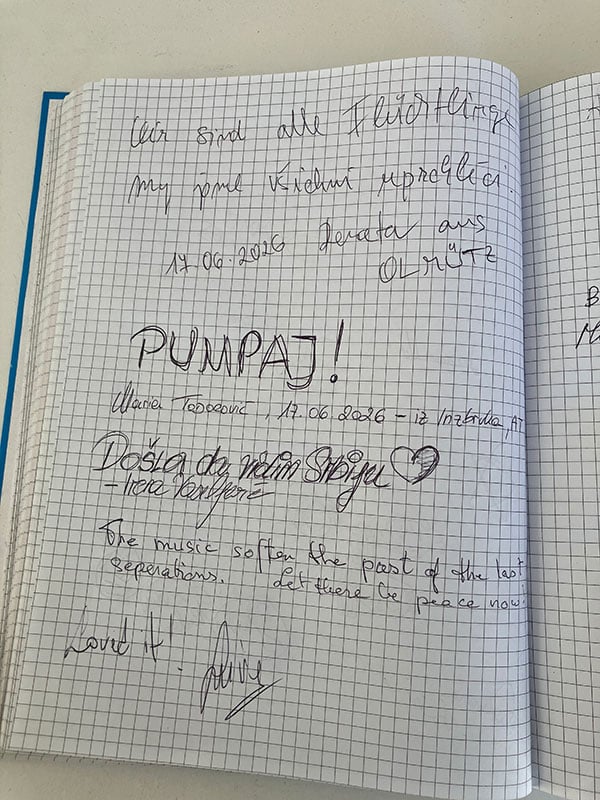
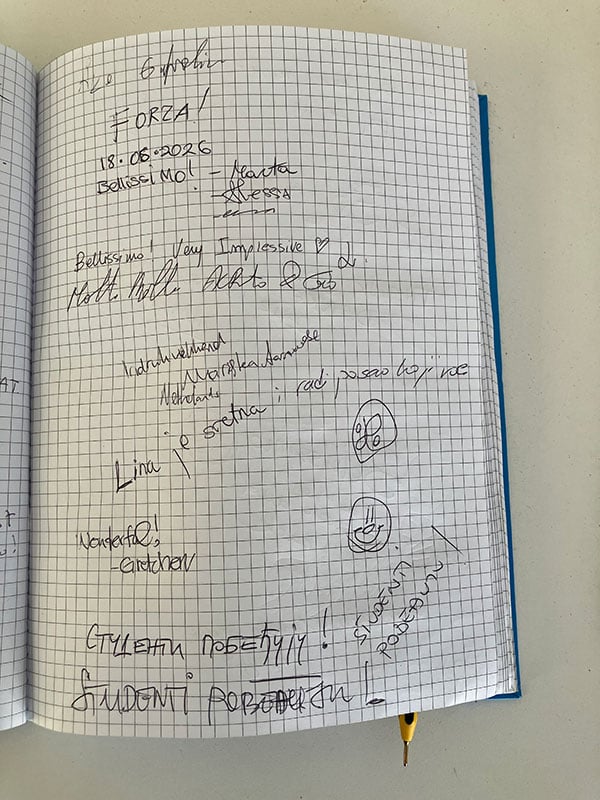
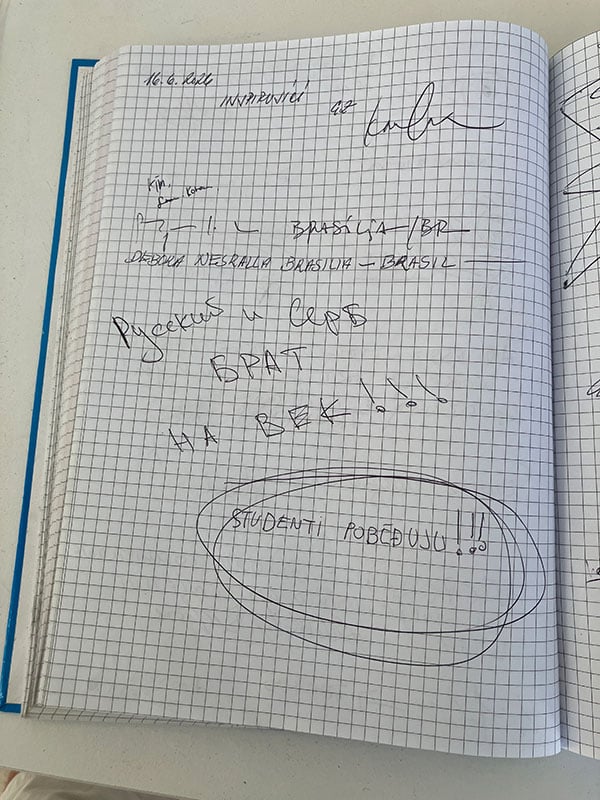
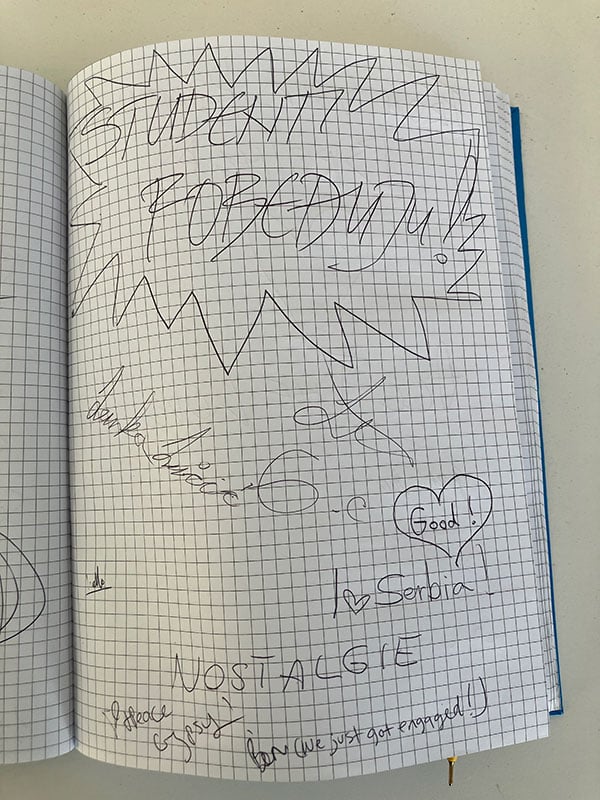
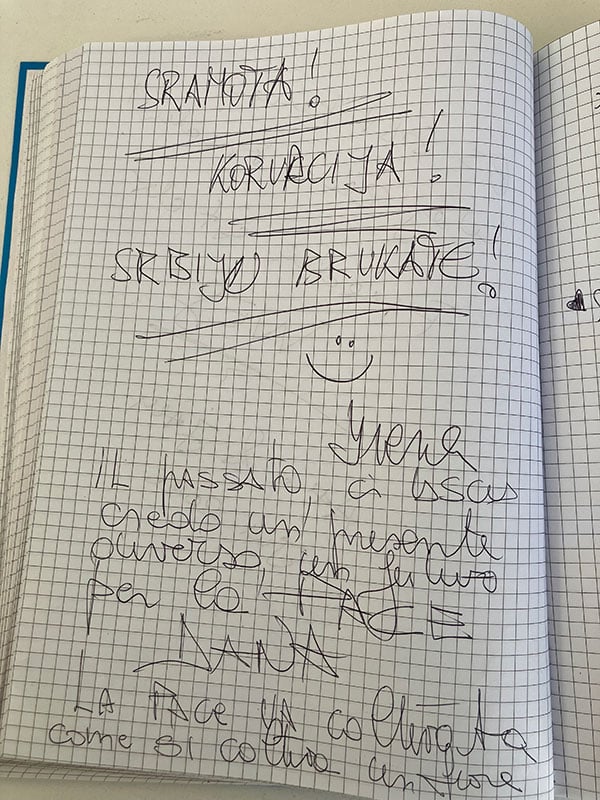
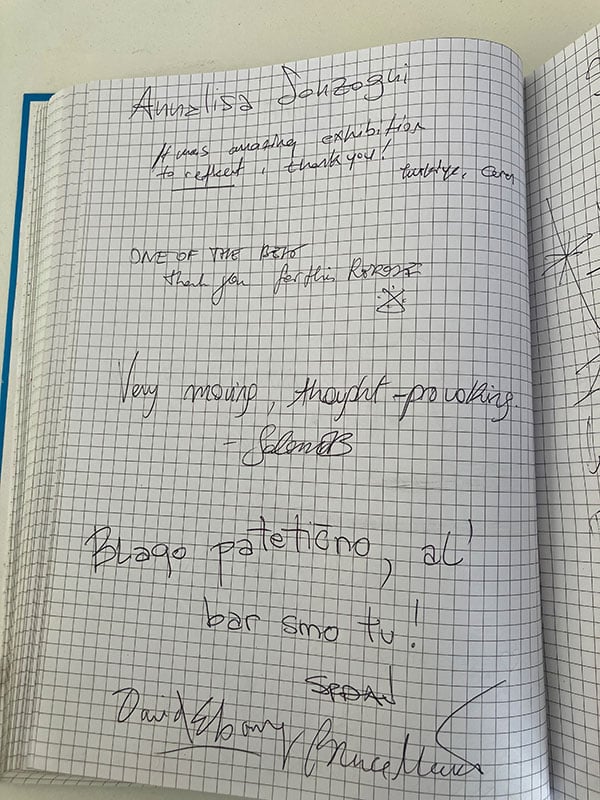
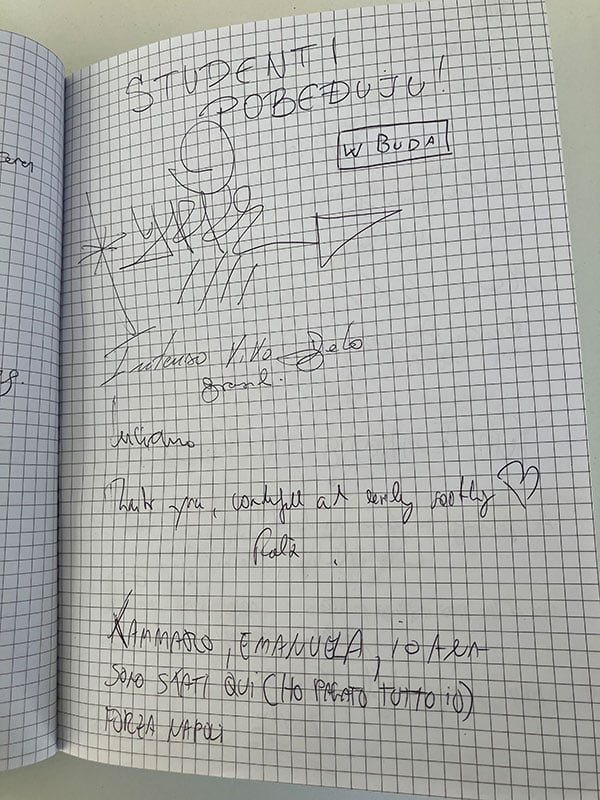
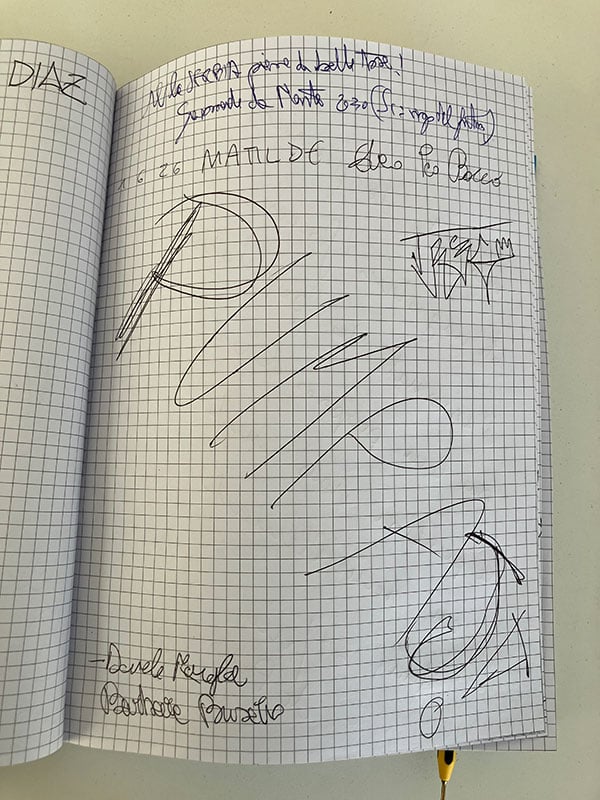
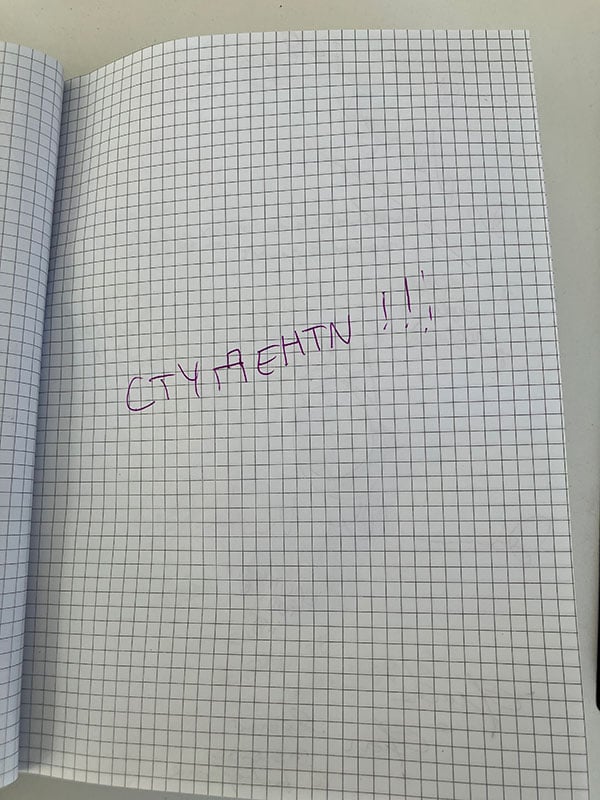
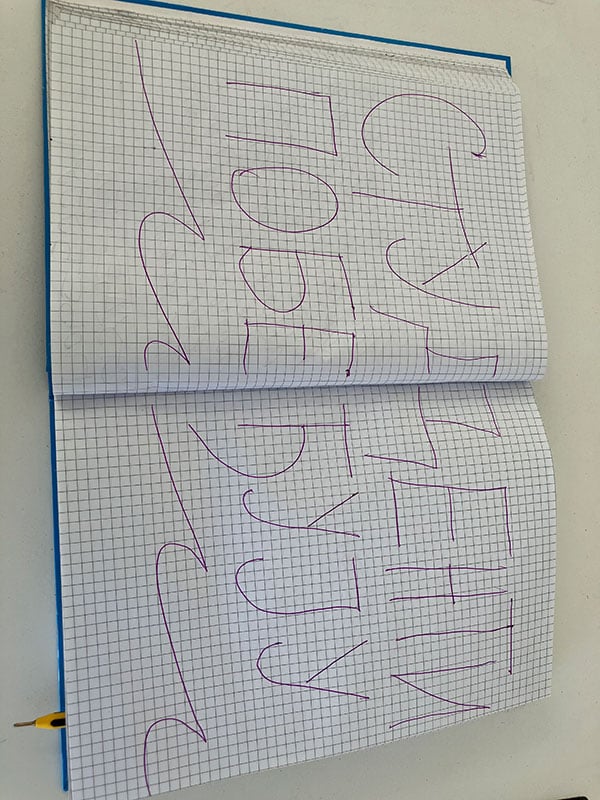
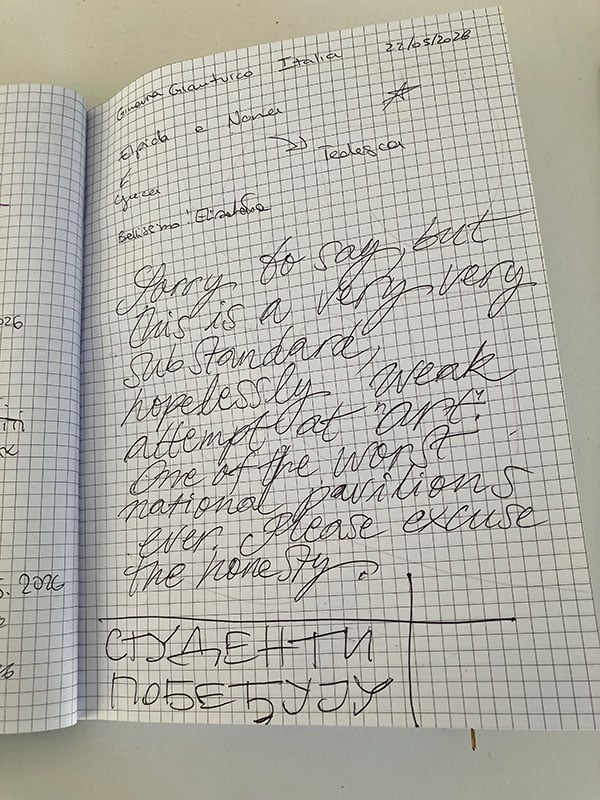
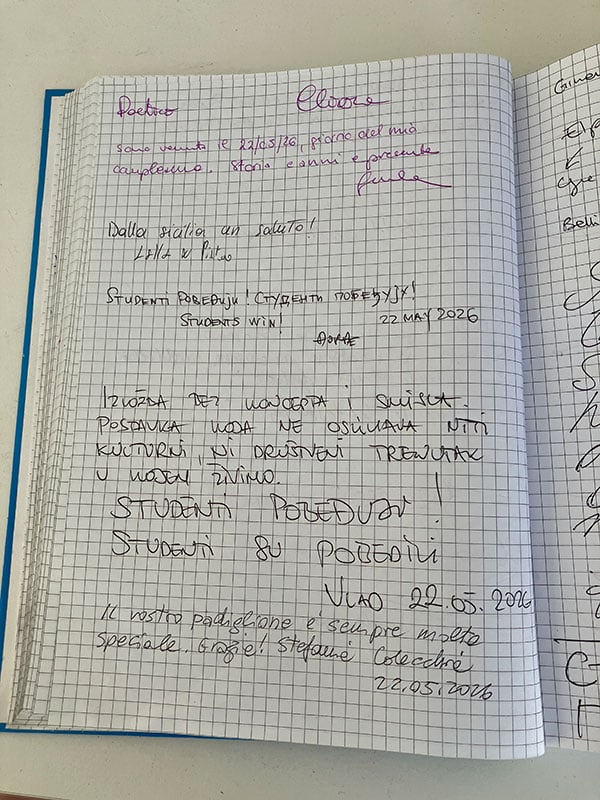
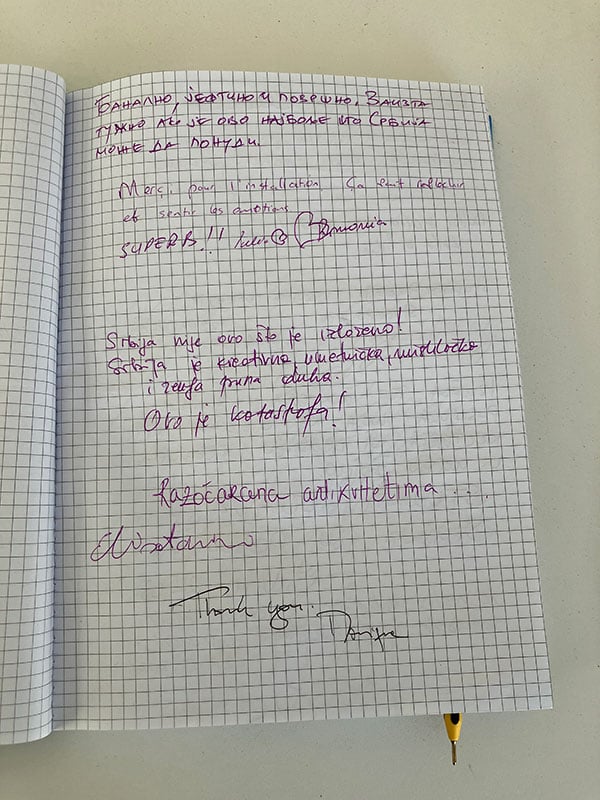
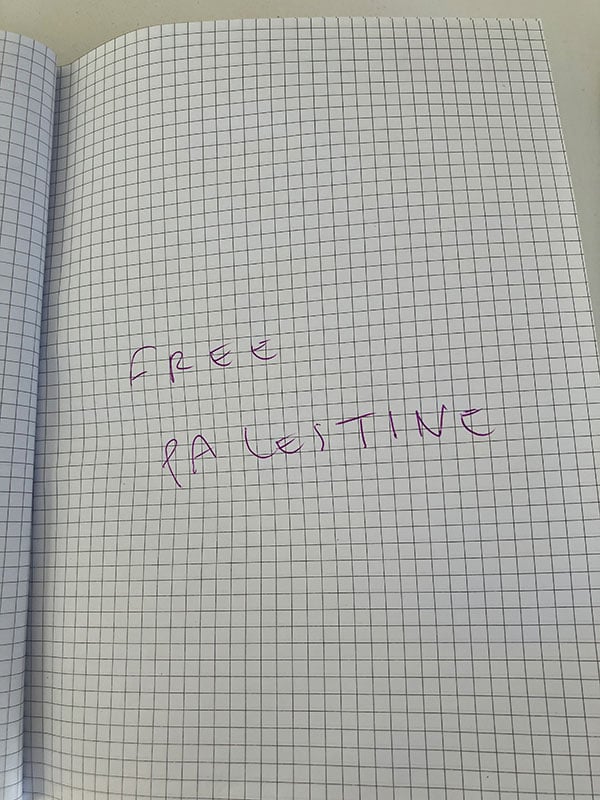
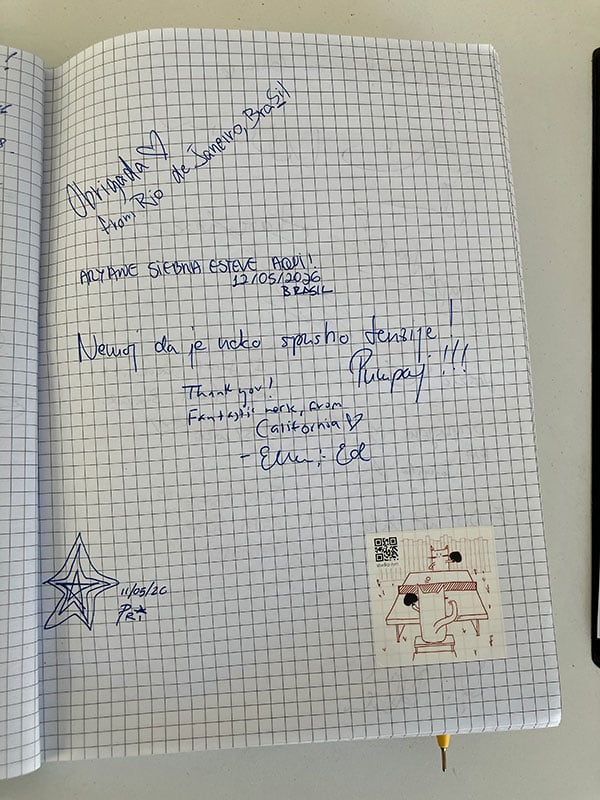
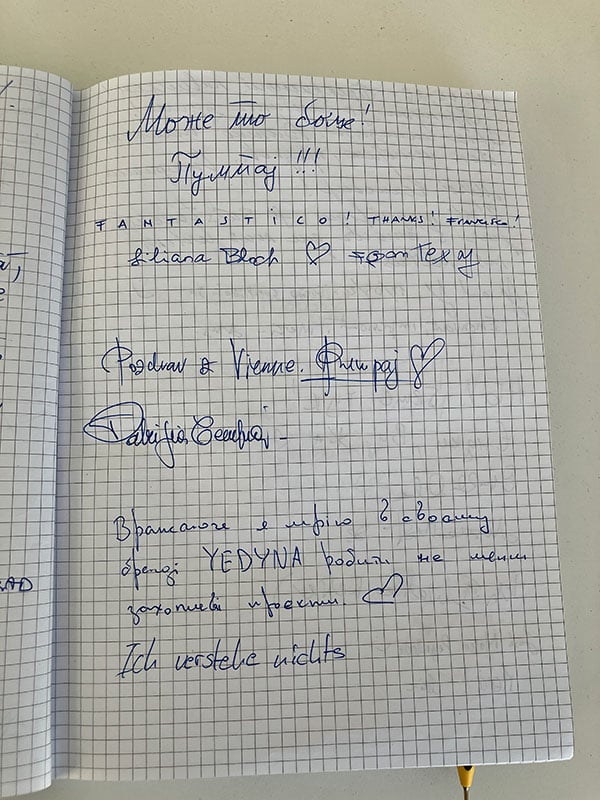
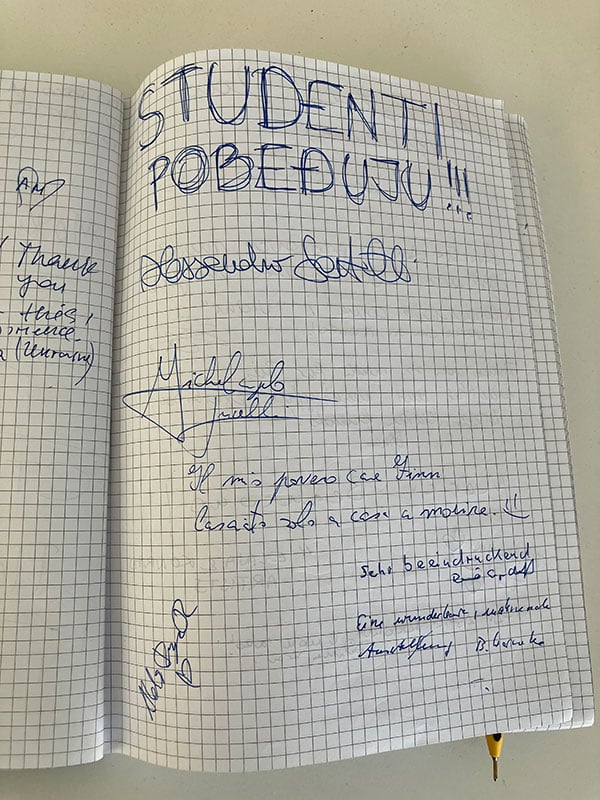
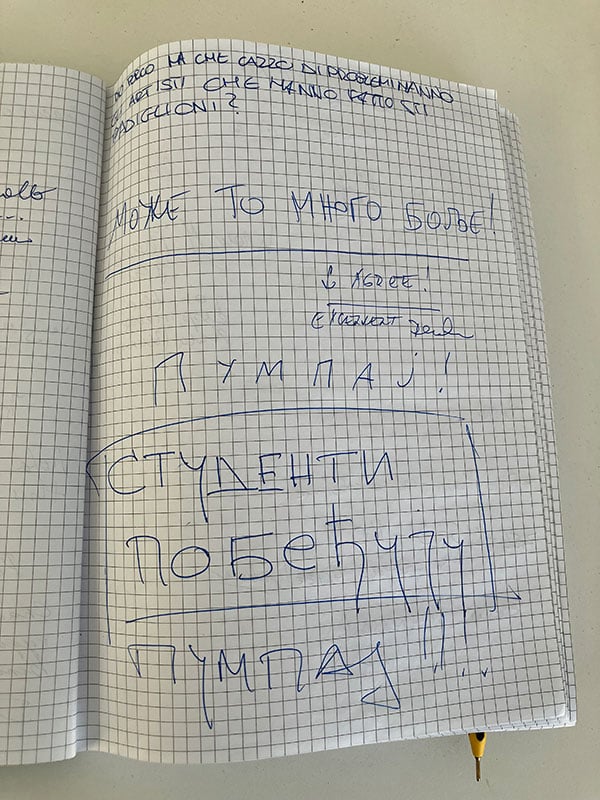
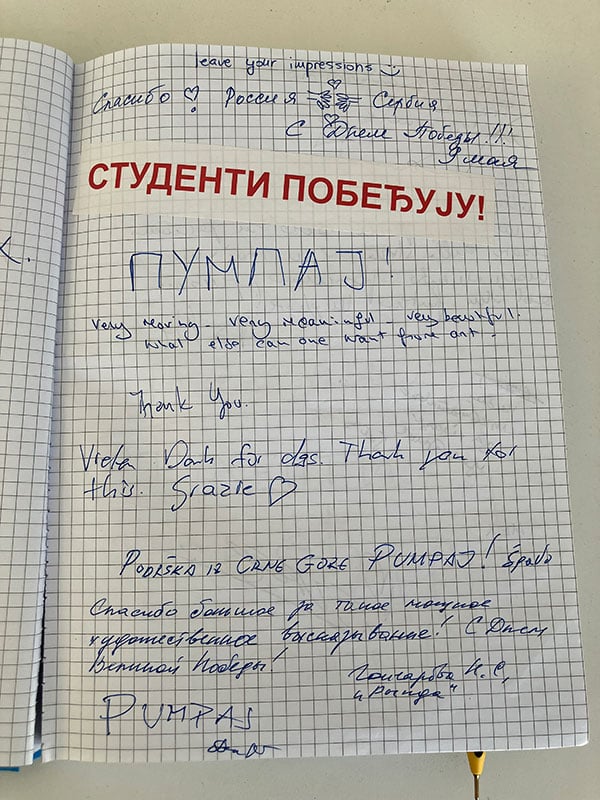
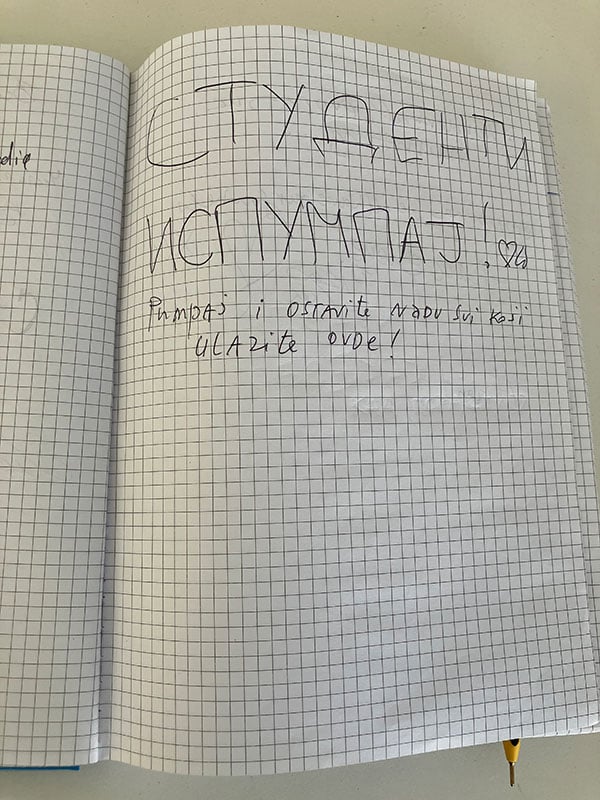
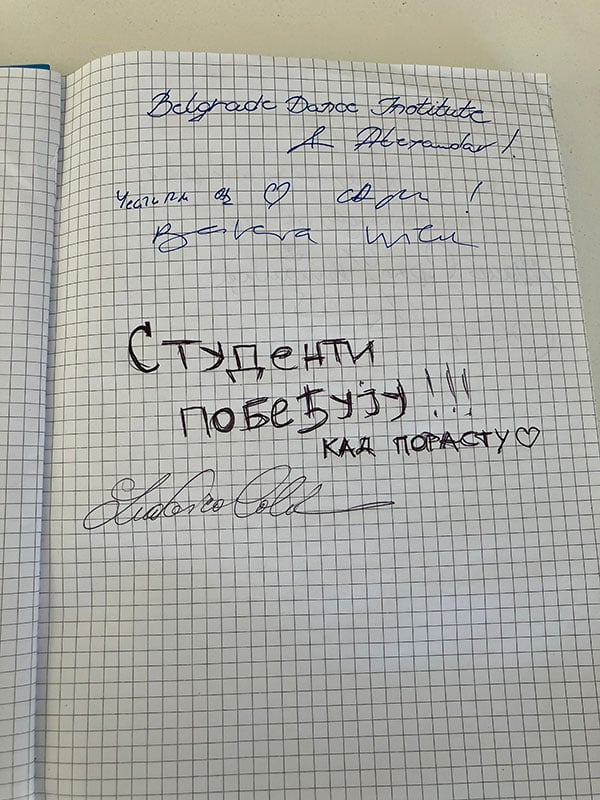
Fortunately, the pavilion is not reduced to just Đaković’s installation, as there are also its visitors. And it is precisely the relation between the visitors and this overall ambiance that reflects the actual situation in Serbia today. In contrast with the Israeli and Russian pavilions, the world media failed to register the protests in front of the Serbian pavilion. Still, it is enough to take a peek into the Visitors’ Book at the entrance to the pavilion to see how the visitors relate to what present-day Serbia has to offer at the Biennale. Page after page of it is covered by slogans against Aleksandar Vučić’s regime. From “We were here – students from Serbia”, to the inevitable “Students are winning”, and “Down with ćaci,” but also “Make art about Srebrenica”. The alternative Serbian pavilion is located between the covers of this thick A4 notebook. One day, hopefully at the next Biennale, when Serbia will have a truly representative pavilion, this notebook could find its place among exhibits worthy of display there.
Translated by Ljiljana Nikolić
Peščanik.net, 08.09.2026.


