

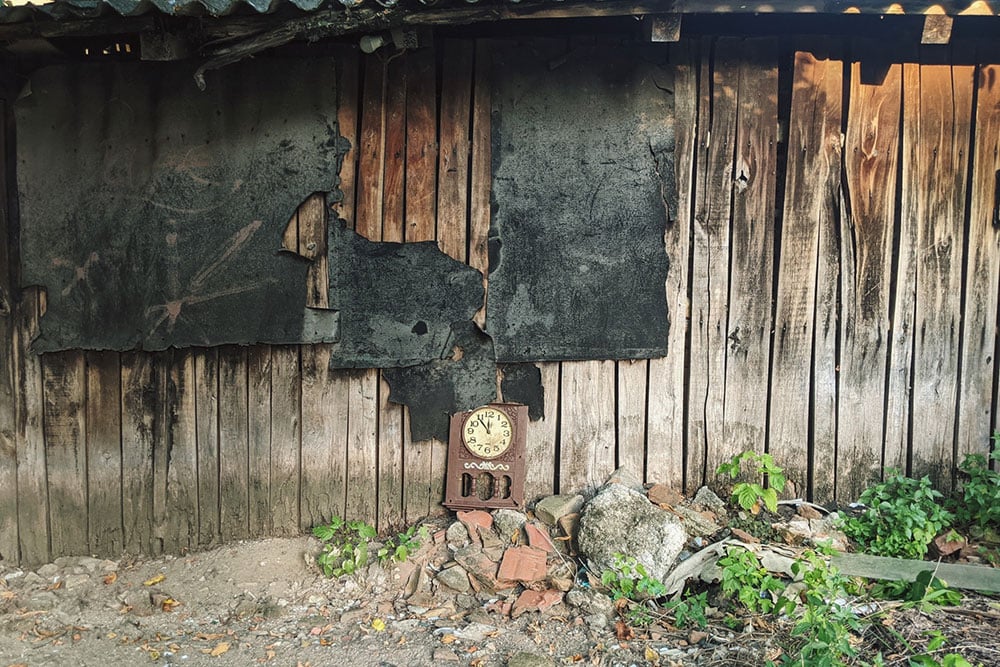
“We must be wise, hide under a rock for a while, and wait for the rain to pass,” Vučić told the Serbian people from Davos.
No small number of people, analysts, professors, intellectuals, supported this idea. Simplified, they said: a new world order is being built, we should wait to see the outcome and then join the winners.
That is true, to an extent. We are indeed witnessing attempts to finally level the “old world order,” which was never even fully built and yet has already become dilapidated. However, what is being presented to us as the future global arrangement has neither order nor structure; everything is practically reduced to more or less naked force. Which, if we are honest, is nothing new – it is in fact centuries old.
Only in the last hundred years or so have serious efforts been made to organize international relations on different principles, that is, to build a world governed not by brute force but by rules and agreements. The first attempt was the founding of the League of Nations after the First World War, and the second was the United Nations after the Second.
Those first global institutions, created at a moment when it became clear that the world had become a global village, were founded on the slogan of the French Revolution – liberty, equality, fraternity – or on even older postulates of the European Enlightenment, expressed most succinctly through (Kant’s) idea of perpetual peace and a world state/federation. Of course, the realization of such a grand idea had to encounter numerous difficulties, above all due to the unpreparedness of (the greater part of) humanity, or rather due to the fact that only a small number of nations managed to organize their states (more or less) on the principles of individual freedom and democracy.
This “New new world order,” which certain global centers of power are now trying to build, is conceived on completely opposite principles. What we are seeing are attempts to dismantle already fragile global institutions and to divide the planet into so-called spheres of interest, most likely three, ruled as feudal domains by the great powers: America, Russia, and China. More precisely Trump, Putin, and Xi.
And since no triumvirate has ever been able to last long, this would in fact mean permanent war. Predominantly cold, but those battles would, at least occasionally, also be armed – to paraphrase, albeit reluctantly, Slobodan Milošević.
So, what is to be done, as Lenin would say. This is not the first time Serbia has found itself facing such a dilemma. For example, it was in a similar situation sometime toward the end of the 1930s. And it found two answers to that dilemma. One was, so to speak, the Chetnik answer: hide in dugouts, wait for the evil to pass, and once it does, crawl back out into the daylight. This later turned into collaboration with evil, or, if we’re being frank – fascism, which left lasting consequences on the essence of the nation.
The other answer, let us call it the Partisan answer, was based on a clear commitment – active struggle against evil. That logic proved victorious, not only in the short term but also in the long run.
Analogies, of course, especially historical ones, must be treated with the utmost caution, and this one should primarily be understood in a symbolic sense. But symbols matter; they mark us, both as human individuals and as a collective.
This also applies to Vučić’s metaphor of the rock. The question arises: who hides under rocks? Mostly reptiles, right? Snakes, lizards, and similar characters.
Finally, on a purely practical level, how long should “we” remain under that “rock” if, as Vučić himself said, the “political divorce between the EU and the US is permanent”?
Translated by Marijana Simić
Peščanik.net, 30.01.2026.


- Biografija
- Latest Posts

Latest posts by Mijat Lakićević (see all)
- Ubistvo Radića - 21/07/2026
- Kako je tandem Lučić–Vučić upropastio Telekom - 10/07/2026
- Kosovo i Ustav Republike Srbije - 17/06/2026
