

The term “Ustaša culture today” was coined nine years ago by Boris Buden, in an attempt to explain the then-controversial appointment of Zlatko Hasanbegović – a revisionist historian, extreme right-winger, and apologist of the Ustaša regime – as Minister of Culture in Tomislav Orešković’s government. However, by “Ustaša culture,” Buden does not primarily mean what might first come to mind: a flood of revisionist kitsch, Thompson concerts, and the Ustaša folklore that accompanies them, although these could be considered a marginal part of the phenomenon in question. According to Buden, Ustaša culture is:
“A kind of paroxysm of the nationalist concept of culture. It is the nationalist concept of culture at the zenith of its decadence. Ustaša culture is Croatian national culture, completely deflated, completely empty; it is a container without content. Its sole content is political. It is culture reduced to its political essence. Ustaša culture is Croatian national culture in its final decadence and disintegration, in which it is no longer capable of articulating anything other than the mere fact of identity essence located in the past. That is why you have an Ustaša-historian at the head of culture, because it is a dead culture.”
For Buden, a typical symptom of the return of Ustaša culture is the destruction of the legacy of Yugoslav modernism and modernist monuments, such as the one erected in 1968 on the slopes of Papuk mountain, created by academic sculptor Vojin Bakić in honor of fallen Partisan fighters and victims of fascist terror. This monument was blown up in 1992, at the height of the chauvinist frenzy that had taken over Croatia at the time, in an act widely suspected to have been organized and carried out by units of the Croatian Army. For Buden, however, this was not merely an expression of primitive anti-communism and revisionism, but of Ustaša culture in the sense described above – a confrontation with modernism and a culture open to the world, translatable and comparable with other world cultures: “In former Yugoslavia, we had a connection to the pace at which the world developed; we had modernity. You could go out into the world with Bakić’s monument and say – look, admire, see how modern we are… but, as you know, they destroyed it.” In short, it was a confrontation with Croatian culture as a culture that could communicate and compete on equal terms with the most developed European cultures.
Instead, “Ustaša culture” developed a model of solipsistic and untranslatable national culture – a culture trapped in the past and in identity kitsch. Tuđman’s Bespuća povjesne zbiljnosti (“The Wasteland of Historical Reality”) was, according to Buden, a program for implementing this cultural policy, and Hasanbegović – the “Ustaša-historian” as Minister of Culture – was merely its final expression.
Does Ustaša culture in Buden’s sense exist in Serbia? To answer this, we only need to look at two events from last week. On Friday, November 7, after days of debate, the National Assembly passed a lex specialis for the old General Staff building, opening the way for the demolition of this protected cultural monument. The rhetoric of the ruling party MPs was aimed at belittling the value of this modernist masterpiece (as it was dubbed by one of Europe’s most prominent cultural heritage organizations, Europa Nostra) as well as its author, architect Nikola Dobrović. In their statements, they referred to the General Staff building as a “communist symbol” or, in the case of Milenko Jovanov, linked it to the SFRY (through the use of the name “Federal Secretariat for National Defense”) and the hated figure of Tito, described as an “Austrian corporal” in revisionist pamphlets from the early 1990s1. But, just like with Bakić’s monument discussed by Buden, anti-communism, anti-Titoism, and anti-Yugoslav sentiment here only serve to mask the fact that this is the destruction of the highest modernist achievements of national culture. The fact that, in this case, it is done not in a surge of chauvinist frenzy but to curry favor with private capital and a foreign investor (most likely Trump personally, who is also waging a war against modernist heritage in the U.S.) does not change much.
Chauvinist frenzy, however, is not far off. It is evident in the Serbian government’s decision, made just one day earlier, to establish the Faculty of Serbian Sciences. With this decision, the Faculty of Philosophy in Niš – the first faculty in the city to support students’ blockade – is split, and three of its departments (History, Serbian Studies, and Russian Language and Literature) are separated to form a new, loyalist faculty headed by trusted party cadres. One of them, a historian and current state secretary in the Ministry of Culture, explains the need for this new faculty as follows:
“I see that in recent days the ‘left-liberal world in our country has jumped as if scalded at the mention of the establishment of the Faculty of Serbian Sciences in Niš. They were shocked by the government’s proposal, initiated by the City of Niš and a group of distinguished local university professors, historians, and Slavists. They find it hard to accept that there are people willing to show interest and responsibility for preserving the fundamental identity sciences and national identity. It is even harder for them to accept that this is happening in an era when, under the guise of modernity, the primal values of the Serbian people are systematically undermined, replaced by anarchism and destruction of the state. The prefix “Serbian” is a problem for them. They panic when they hear that anything in Serbia carries its national marker. Everything Serbian they portray as retrograde, backward, and undesirable, while nostalgically looking toward Varaždin and Zagreb, recording the wise thoughts of Severina, convinced that the standards of European modernism are hidden among our neighbors. Their media and journalists compete to discredit the very idea of “Serbian studies,” while carefully hiding from the public that in European Croatia, at the prestigious University of Zagreb, the Faculty of Croatian Studies has been successfully operating for three and a half decades. There, “Croatian history,” “Croatology,” “Croatian Latinity” and numerous similar disciplines are studied without ideological obstacles, because in the European Union it is a given that a state has the right to study and nurture its own national identity.”
For the state secretary, Serbian culture is nothing more than an empty container for identity politics, or, in Buden’s words, “it is no longer capable of articulating anything other than the mere fact of identity essence located in the past.” If he were capable of any reflection, the state secretary might notice the irony in attributing a nostalgic gaze toward Varaždin and Zagreb to his fictional “left-liberal” opponents, while simultaneously recommending the Faculty of Croatian Studies as a model to be implemented in Niš.
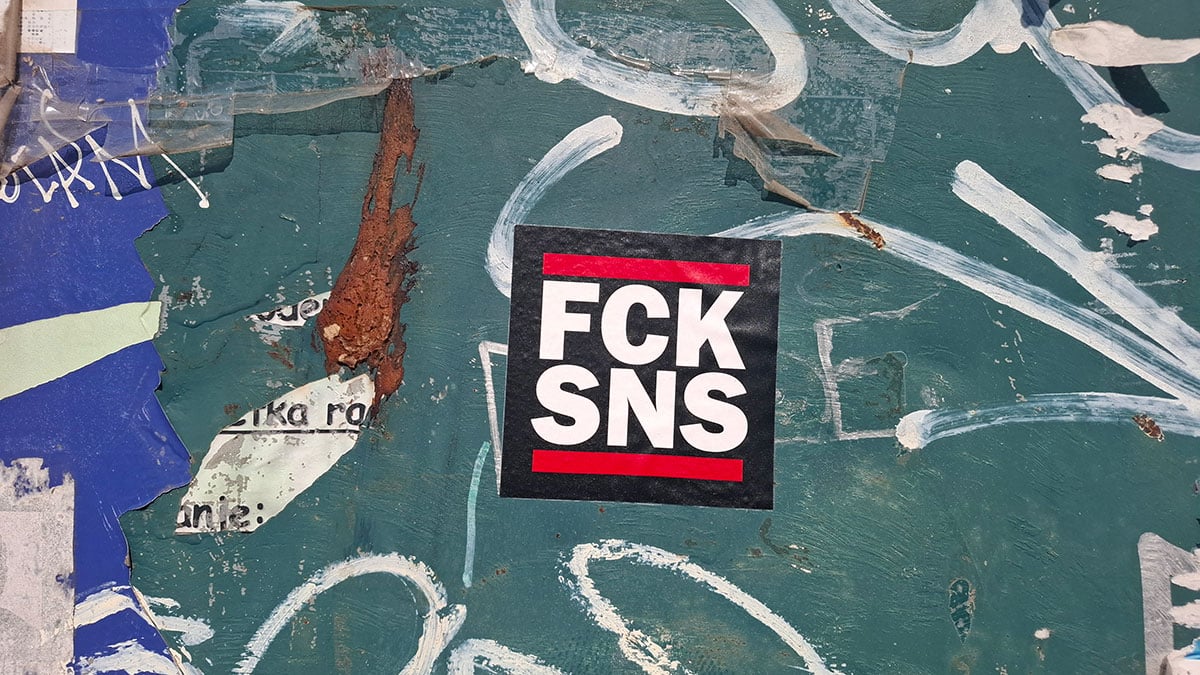
The true irony, however, lies in the fact that the Croatian Studies project was part of Tuđman’s plan outlined in Bespuća povjesne zbiljnosti: the faculty was founded in 1992—the same year Bakić’s monument in Slavonia was blown up. From Tuđman, through the “Ustaša-historian” as Croatian Minister of Culture, to our historian-loyalist as state secretary: in the name of identity, against the highest achievements of national culture and the most important national institutions. This is, in short, the SNS culture today.
Translated by Marijana Simić
Peščanik.net, 14.11.2025.


________________
- According to him, the building was erected on the site where the buildings of the Ministry of Military Affairs and the Military Academy once stood, which had “true and genuine architectural and cultural value,” but which the postwar authorities did not want to restore. “It makes sense to conclude that the one who fought against soldiers educated in those buildings, at Cer and Kolubara, as an Austrian corporal, did not want to rebuild the places where Serbian commanders studied,” said Jovanov, alluding to Josip Broz Tito.

